


5 Island Nations at Risk of Sinking, Forcing Hundreds of Thousands into Homelessness, Disproportionately Affected Despite Low Carbon Emissions


A report from Groundswell by the World Bank estimates that by 2050, the world could have as many as 216 million climate refugees. Most will be forced to relocate to escape natural disasters, including heatwaves, extreme heat, droughts, and floods, as well as rising sea levels and severe storm surges that could eventually permanently submerge 5 small island nations that are only a few feet above sea level.
Maldives
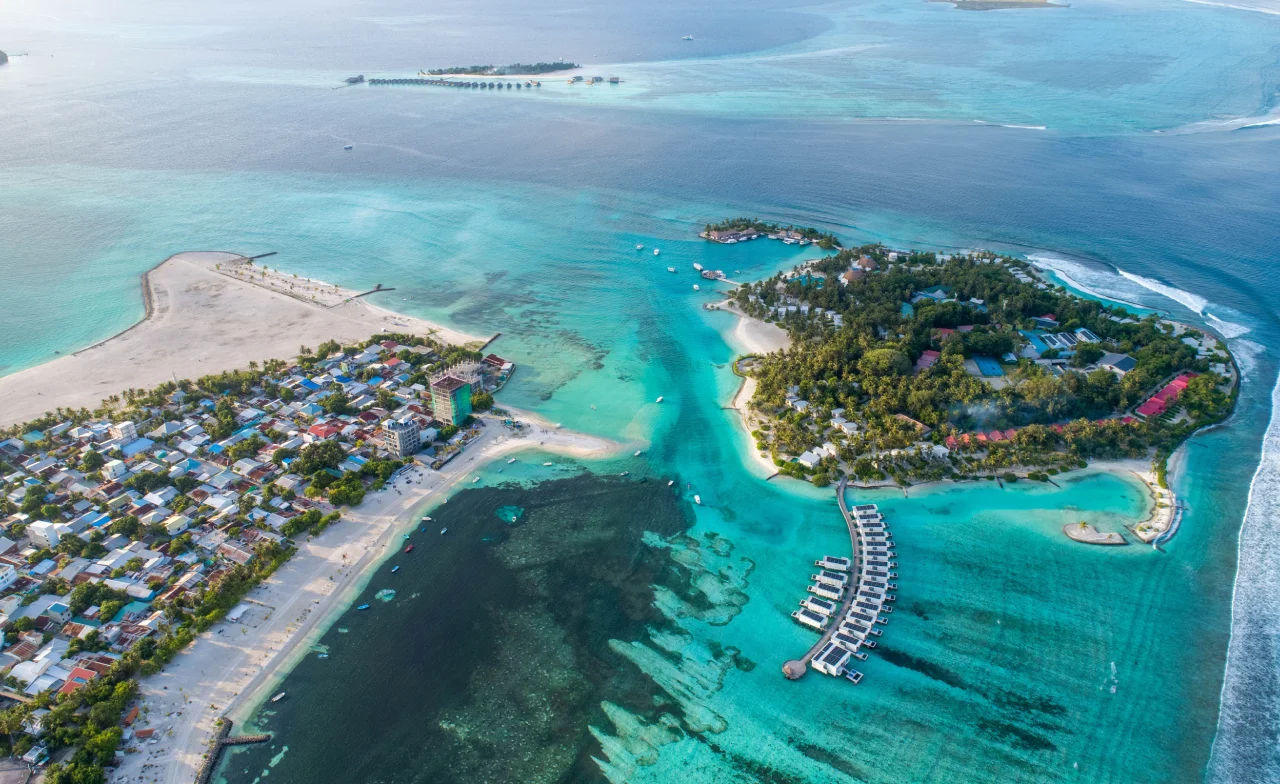
The Maldives is considered one of the most concerning island nations because its highest point is only 2.3 meters above sea level, and over 80% of the islands are less than 1 meter above sea level. Even a slight rise in sea level can bring significant changes to the living areas of approximately 600,000 people. Although the entire island may not immediately sink, the impacts could mean coastal communities facing floods, storm surges, severe coastal erosion, and saltwater intrusion, rendering them uninhabitable.
สรุปข่าว
A report from Groundswell by the World Bank estimates that by 2050, the world could have as many as 216 million climate refugees. Most will be forced to relocate to escape natural disasters, including heatwaves, extreme heat, droughts, and floods, as well as rising sea levels and severe storm surges that could eventually permanently submerge 5 small island nations that are only a few feet above sea level.
Maldives
The Maldives is considered one of the most concerning island nations because its highest point is only 2.3 meters above sea level, and over 80% of the islands are less than 1 meter above sea level. Even a slight rise in sea level can bring significant changes to the living areas of approximately 600,000 people. Although the entire island may not immediately sink, the impacts could mean coastal communities facing floods, storm surges, severe coastal erosion, and saltwater intrusion, rendering them uninhabitable.
Tuvalu
Tuvalu is another nation that clearly reflects the vulnerability of small island countries. Currently, Tuvalu has a population of approximately 11,000 people residing on small, very low-lying islands. Therefore, rising sea levels directly impact residential areas. The issues faced are not limited to coastal flooding and seawater erosion; Tuvalu also suffers from saltwater intrusion into groundwater sources, damaging agricultural areas and potable water supplies. Crucially, Tuvalu has limited space for community and national expansion, making adaptation difficult. Relocation to other countries is thus seen as an option for long-term survival, with Australia having made a special agreement to issue visas to Tuvaluan citizens for relocation to cope with rising sea levels and global warming.
Marshall Islands
The Marshall Islands is one of the countries facing the same problems as Tuvalu. It consists of 29 atolls and 5 isolated islands, with a total area of approximately 181 square kilometers, located in the Pacific Ocean and less than 2 meters above sea level. The country's population of over 53,000 people is spread across various islands. Over the past decade, the population in the Marshall Islands has been at risk from rising sea levels, storm surges, and coastal flooding, impacting infrastructure and livelihoods. Additionally, drought exacerbates the problem, causing potable water sources to drop to emergency levels, increasing pressure on water and food security.
Nauru
Nauru is the third smallest island nation in the world, with an area of approximately 21 square kilometers, located in the central South Pacific and a population of about 10,000 people living along the coastal areas around the island. When sea levels rise and severe storm surges hit, they can rapidly accelerate coastal erosion, increasing risks in low-lying areas. If coastal areas degrade, adapting to rising sea levels becomes challenging, as residents cannot relocate elsewhere due to limited land. The options for these small island nations are thus very few.
Kiribati
Kiribati is a small island nation located in the central Pacific Ocean and is the only country in the world with territory in all four hemispheres – North, South, East, and West – due to its islands straddling the equator and the International Date Line. It has a population of about 130,000 people. Moreover, it is one of the countries rapidly losing habitable land due to rising sea levels. When sea levels rise, combined with severe storm surges, some parts of the islands are at increased risk of frequent flooding. Simultaneously, freshwater sources in communities are being encroached upon by saltwater, rendering them unsuitable for consumption and agriculture. As a result, most residents face issues with housing, clean water, and food security simultaneously. In the past, the President of Kiribati has warned the people to prepare for relocation for survival before it's too late.
These small island nations are facing common problems from the climate change crisis and global warming. Despite emitting very small amounts of greenhouse gases compared to industrialized nations, they are among the first to suffer the impacts. The concern is not just the increasing effects of natural disasters; the climate crisis also forces many people to relocate, losing their homelands, cultures, and ways of life irrevocably.
ที่มาข้อมูล : The Conversation
ที่มารูปภาพ : Envato
